01 - 2026
Benedetto x SCAD
Guitar
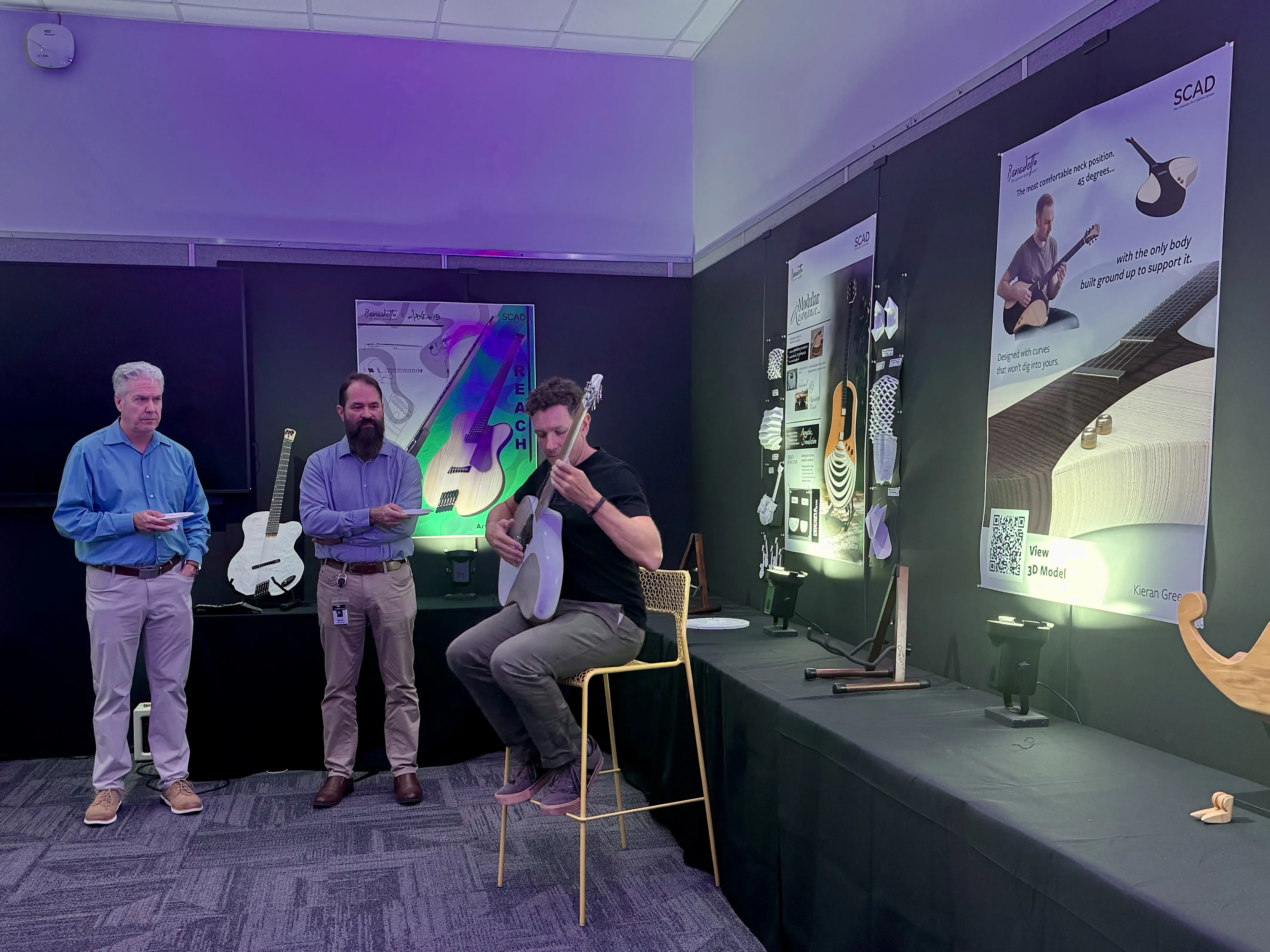
How do you respect heritage and still find something worth improving?
Bob Benedetto's legacy was his tireless quest for the most sonically beautiful, expertly handcrafted guitar. With over 60 years of refinement and innovation, it seemed no easy task to put a new spin on something that well refined. After touring the factory and watching pros play, I kept coming back to how it would feel to play... most notably the blunt edge digging into player's knees. Then I got thinking about my own experience as a guitarist: the wrist fighting for the right angle, the slow back-hunch that creeps in over an hour of playing. I had my mission: what would it take to make a guitar as beautiful to play as it is to hold and listen to?
The fretting hand naturally wants to meet the neck at around 45 degrees. Manufacturers have tried to close that gap by angling the body with a hip cut, which works until you lift your knee and the whole thing dives forward. Keeping the body flat and angling the neck instead solves both - stable on the knee, no dive, and the hand lands where it wants to be.
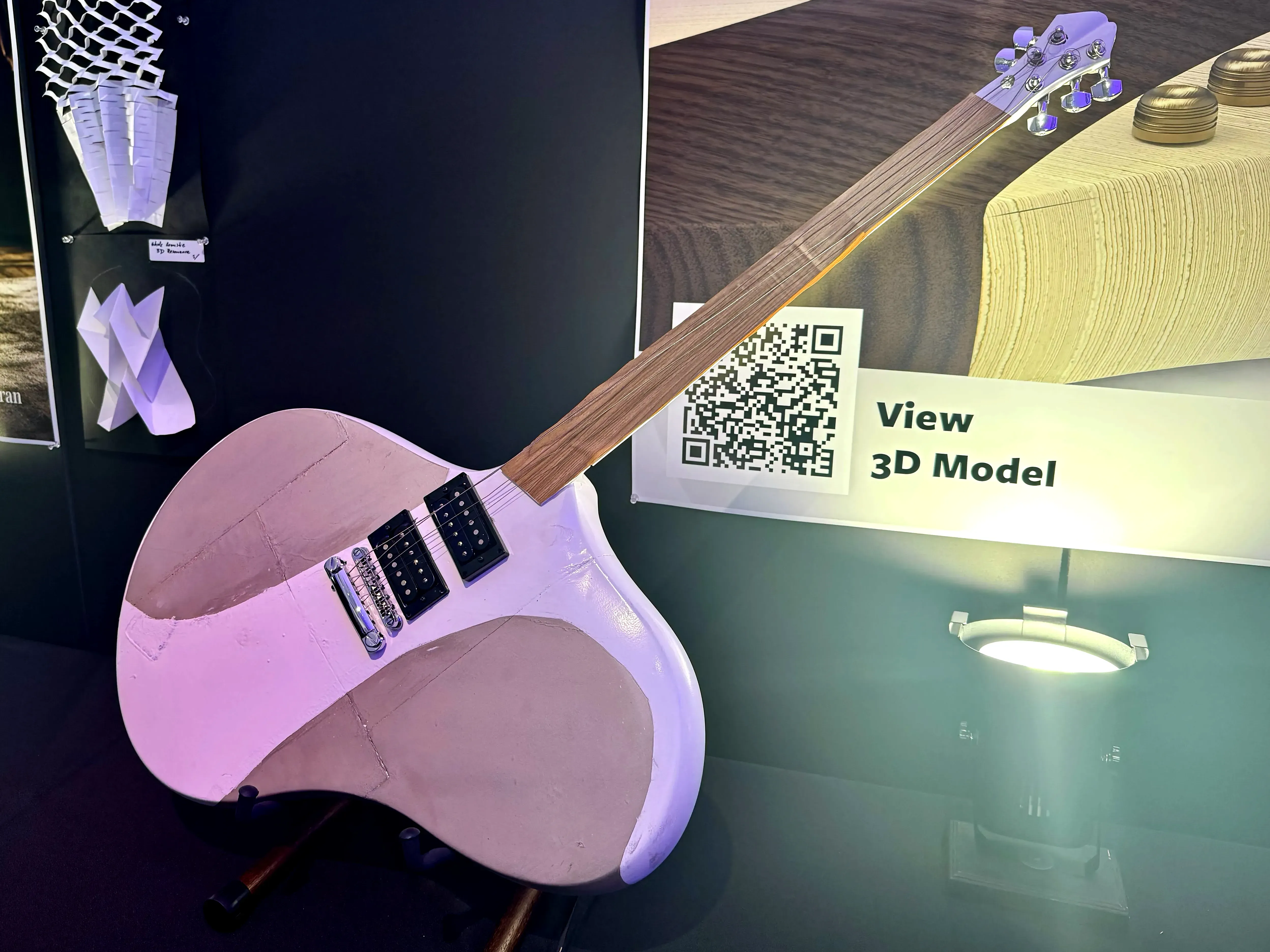
Angling the neck changes everything about the way a guitar is constructed - how the body sits against the knee, how string tension travels through the wood without breaking. I had planned to make a hollow-body variant on a neckthrough design for strength and lightness, with nonstructural carved side panels (for more sculpted ergonomics) in a contrasting wood. Getting it right meant a lot of time moving in between Rhino and physical mockups, each round catching things the last one missed.
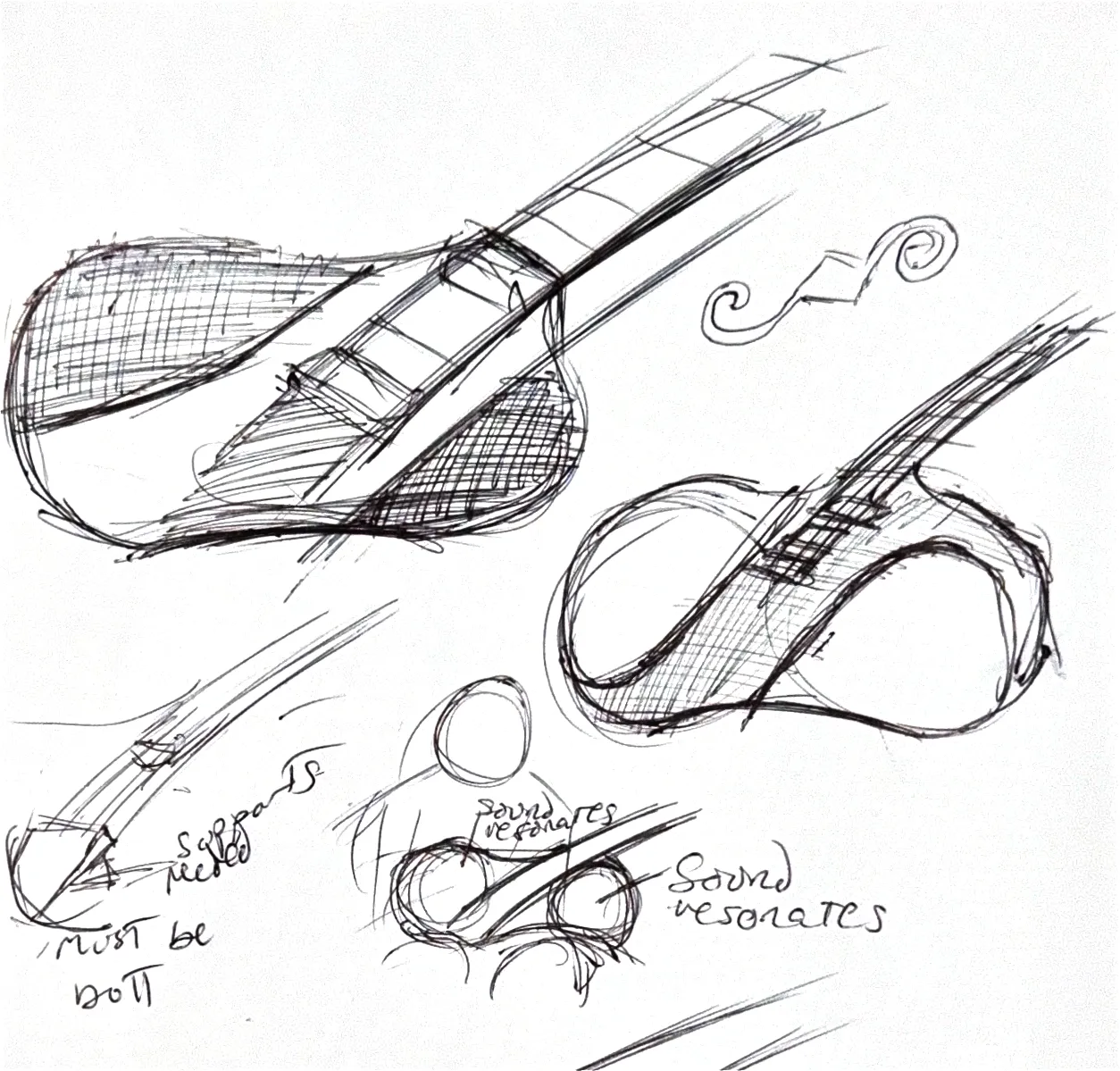
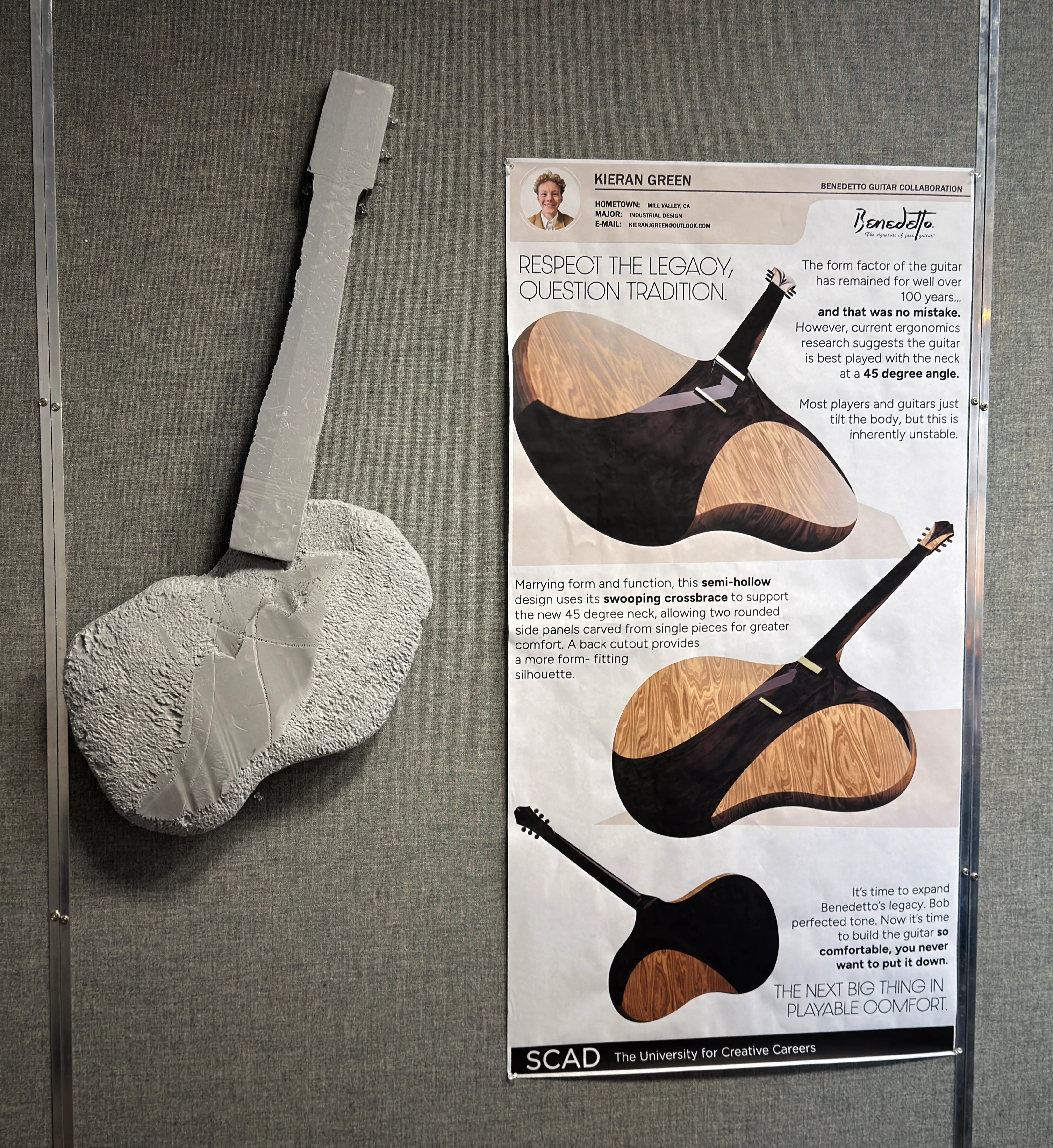
The Process
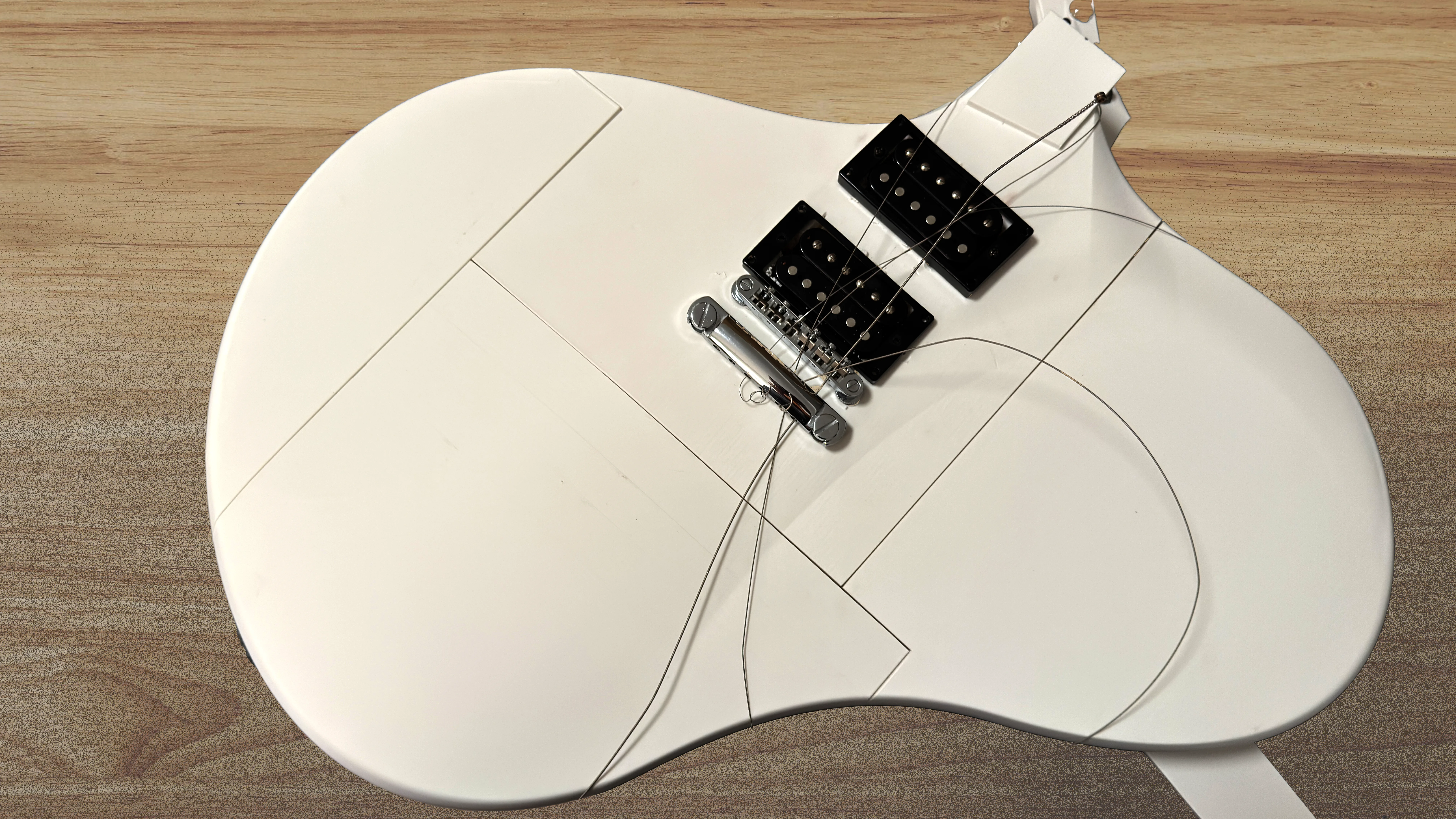
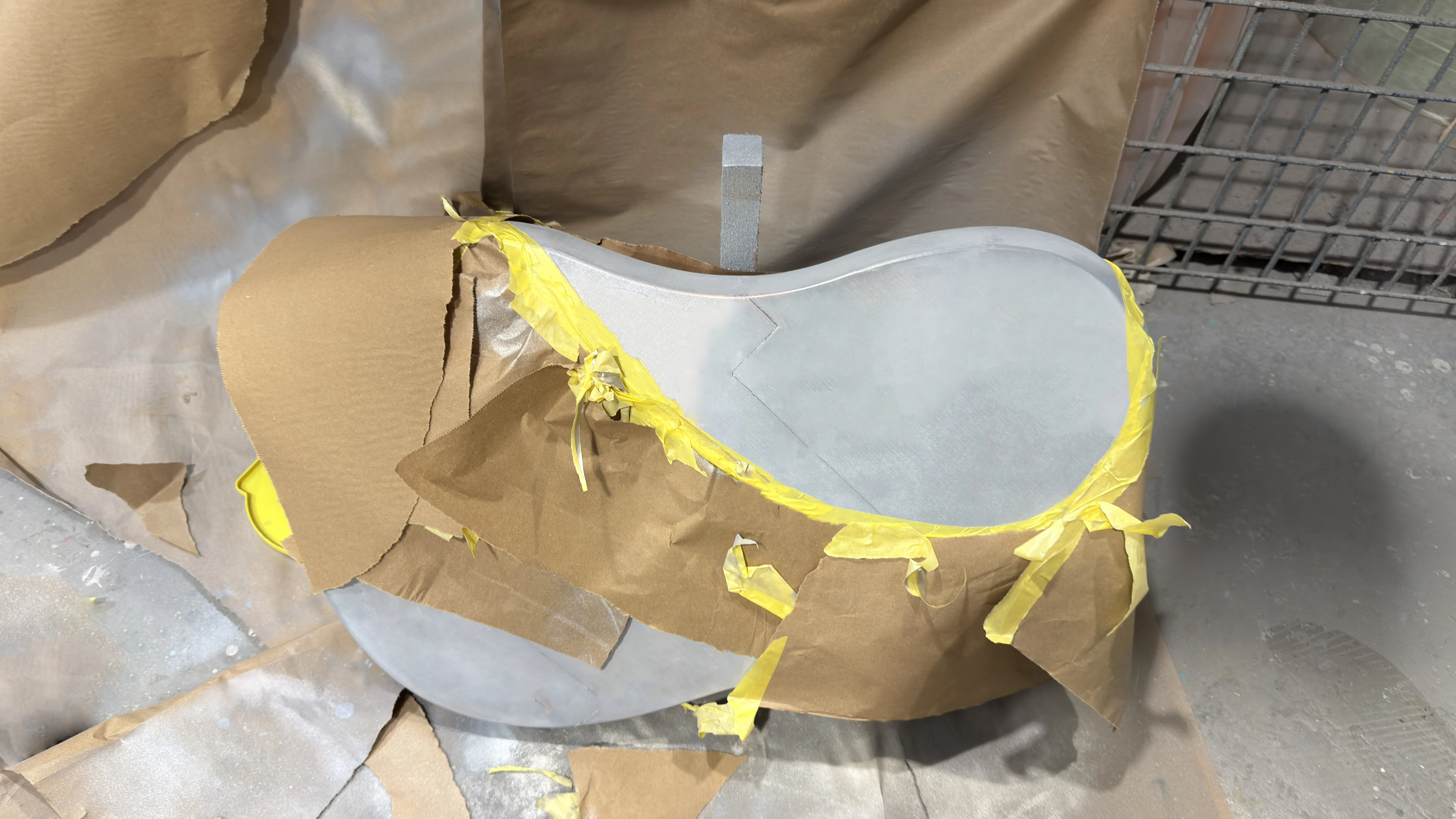
The CNC lab broke the week before final submission. Around the same time, the client flagged that changing wood materials and thicknesses across the top and bottom panels could introduce unwanted resonance issues. So I pivoted from a semi-hollow body to a fully electric one, with the prototype body 3D printed in FDM plastic. It's not entirely out of character, either. Bob Benedetto built a one-off electric in the 1980s that never made it to production, so this could be seen as a continuation of that exploration.
What This Demonstrates
This project was about finding the problem underneath the problem. The guitar's discomfort isn't a secret - but identifying neck angle specifically, when body geometry is where most people look, came from watching how players actually hold instruments rather than assuming the existing design had already accounted for it. Working within Benedetto's brand meant the solution also needed to feel considered and intentional, not just technically sound.
Sometimes old problems
just need a new angle.